

RADBAR / APPLICATION ENGINEERING
Nuclear & gamma applications
Evaluate flexible wraps and shielding materials against the radionuclide, energy, geometry and practical demands of maintenance work.
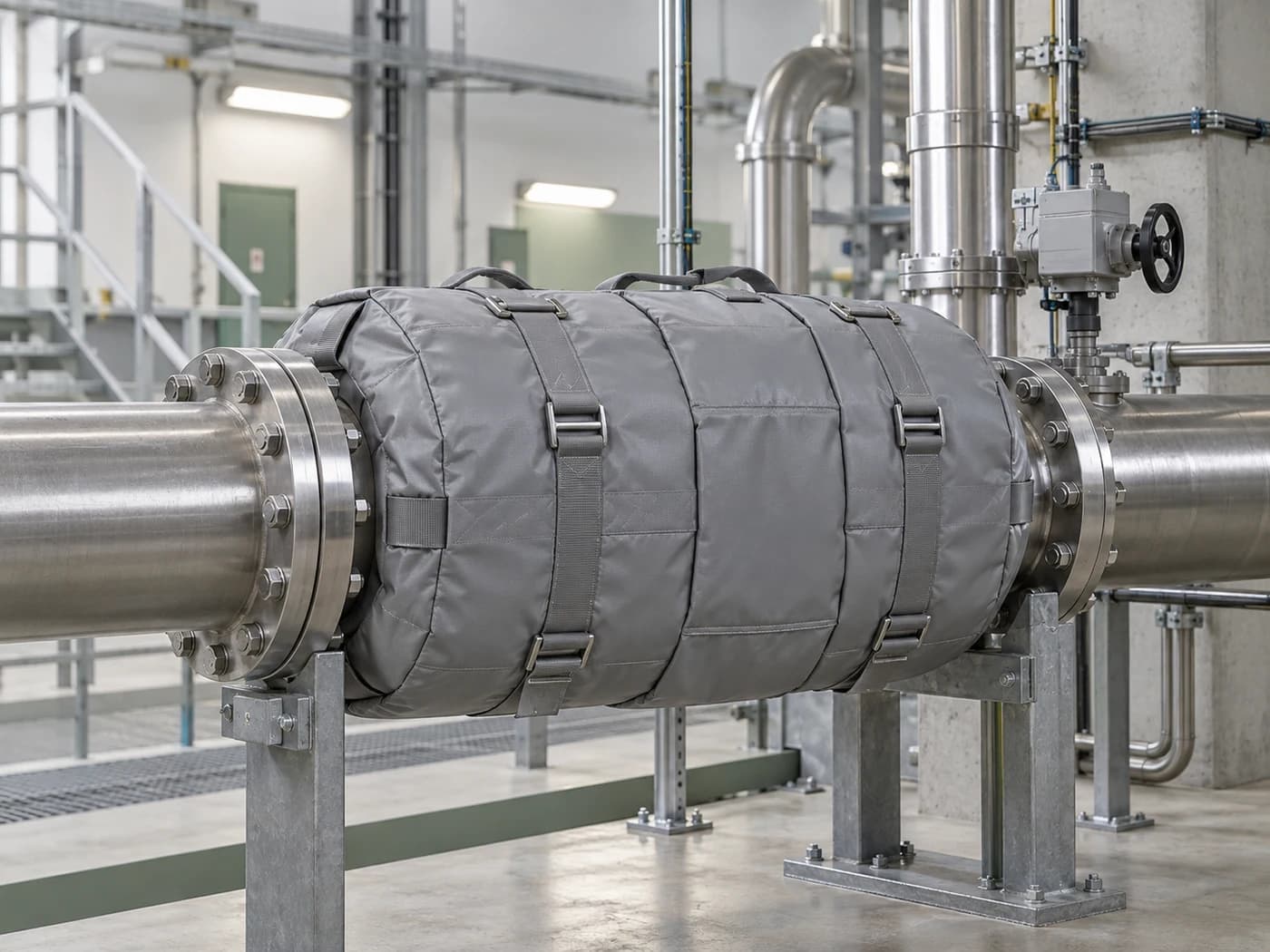 AI-generated application illustration
Understand the source. Define the boundary.
Evaluate flexible wraps and shielding materials against the radionuclide, energy, geometry and practical demands of maintenance work.
How do you evaluate flexible gamma shielding materials?
Gamma shielding in nuclear facilities must be evaluated for the specific radionuclide, energy spectrum, source geometry and measured dose rate. Radbar’s ALF and RLF flexible materials come from a 2021 catalog: ALF is listed for Am-241 and below 100 keV (ALF-125W 0.125 mmPb, ALF-250W 0.25 mmPb), and RLF data refer to N120–N200 reference X-ray qualities. These data cannot be extrapolated to high-energy gamma or neutron fields; confirm current supply and source-specific performance.
Reviewed 2026-09-24 · values from the model catalogs and editions cited
HOW IT FITS TOGETHER
See where the protection works.
Local gamma shielding on a pipe hot spot
- Hot spot: the radionuclide and spectrum define the shielding problem.
- Flexible shielding sheet wrapped around the pipe.
- Overlap between wraps avoids gaps.
- Fixing, for example straps or magnetic mounting, and handling load.
- Dose-rate survey points before and after shielding confirm the result for this source.
FROM THE ORIGINAL PRODUCT LITERATURE
Catalog data, with its conditions.
| Model | Lead equivalence (mmPb) | Areal weight (kg/m²) | Thickness (mm) | Roll size |
|---|---|---|---|---|
| RLF-125W | 0.125 | 1.55 | 0.30 ± 0.02 | 700 mm × 10 / 20 m |
| ALF-125W | 0.125 | 1.2 | 0.31 ± 0.02 | 1250 mm × 20 m |
| ALF-250W | 0.25 | 2.25 | 0.61 ± 0.04 | 1250 mm × 20 m |
ALF is listed for Am-241 / below 100 keV. The RLF energy column mixes kV notation and gamma references, so no gamma-energy rating is inferred.
Source: Gamma catalog 202111, pp.3–4
| Reference quality | Single layer | Double layer |
|---|---|---|
| N120 | 43.41% | 67.16% |
| N150 | 32.68% | 53.46% |
| N200 | 15.60% | 28.89% |
Manufacturer-reported values under reference X-ray qualities and filtration, referencing GB/T 12162.1-2000. They are not radionuclide-independent gamma attenuation values.
Source: Gamma catalog 202111, p.3
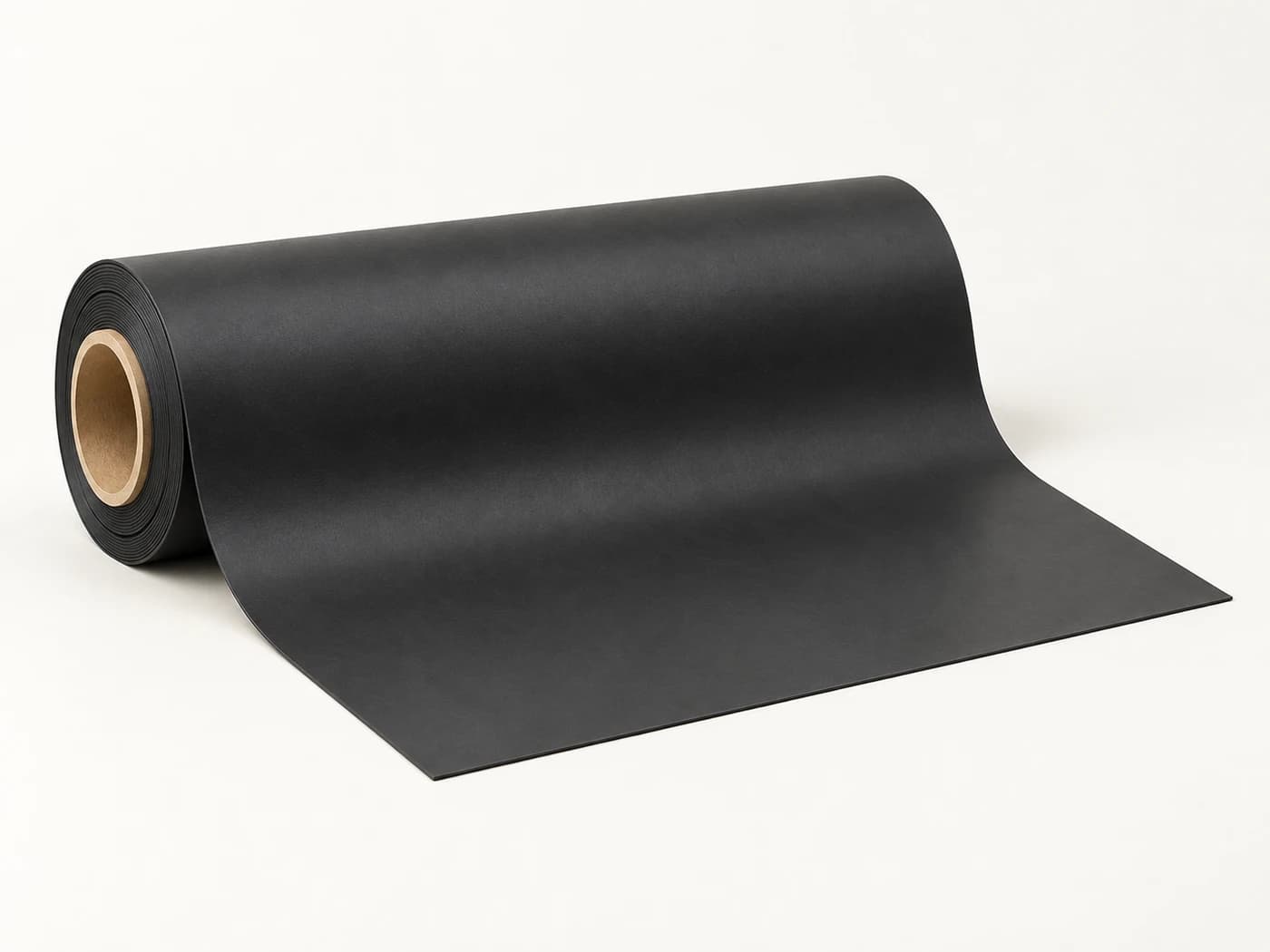
- Flexible composite of radiation-absorbing components and polymer; rolls can be cut, bent or fitted to parts.
- The catalog illustrates cylindrical and complex parts and installation combined with magnetic materials.
SELECTION STEPS
Make the decision in order.
- 01
Characterize the source
Provide radionuclide, spectrum, source geometry, measured dose rate and work location.
- 02
Check the data condition
ALF data refer to Am-241 / below 100 keV; RLF data refer to reference X-ray qualities.
- 03
Plan the layout
Define wrapping, curvature, overlap, fixing and handling loads.
- 04
Define service conditions
State contamination-control needs, allowable mass, material aging and expected duration.
- 05
Assess transmission for this source
Confirm the solution with a transmission assessment for the actual source and arrangement.
COMMON MISTAKES
Where specifications usually go wrong.
- Extrapolating low-energy data to high-energy gamma or neutron fields.
- Reading RLF N120–N200 percentages as radionuclide-independent gamma attenuation.
- Treating 2021 historical specifications as a current supply commitment.
Related products & materials
Questions worth asking.
What information is essential for gamma shielding?
Provide radionuclide, spectrum, source geometry, measured dose rate, work location and handling constraints. Evaluate material transmission for that source and arrangement.
Can low-energy ALF data be used for a neutron or high-energy gamma field?
No. The historical ALF table refers to Am-241 and below 100 keV. Other fields require relevant test evidence and a separate shielding assessment.
LET’S ENGINEER WHAT’S NEXT
Your application. Our next conversation.
Share your equipment, radiation conditions and design constraints. Start with a material decision grounded in evidence.