

RADBAR / APPLICATION ENGINEERING
Food inspection
Balance low contact resistance with curtain overlap, cleaning compatibility and complete-system shielding validation.
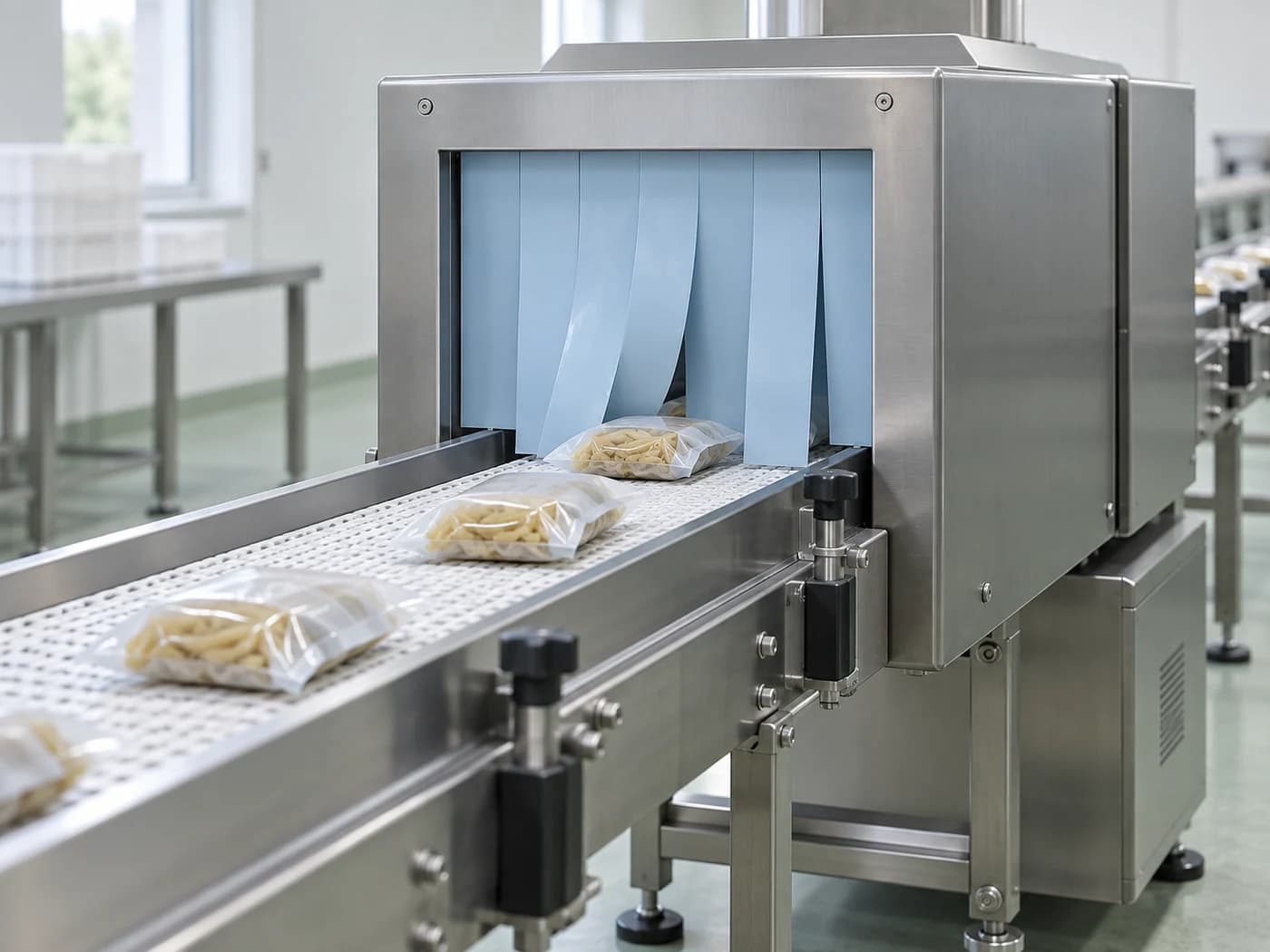 AI-generated application illustration
Keep the line moving.
Balance low contact resistance with curtain overlap, cleaning compatibility and complete-system shielding validation.
How do you choose a curtain for a food X-ray inspection machine?
A curtain for a food or pharmaceutical X-ray inspection machine must shield the tunnel while letting packages pass and surviving washdown. The Radbar food scanner curtain catalog lists three lead-free grades, 0125JBU, 0175JBU and 0250JBU (0.125 / 0.175 / 0.25 mmPb at a listed 90 / 120 kV, 1.78–3.1 kg/m²), with an easy-clean light-blue polyurethane surface. Confirm the final grade on the installed scanner with representative packages.
Reviewed 2026-09-24 · values from the model catalogs and editions cited
HOW IT FITS TOGETHER
See where the protection works.
Curtains in a food inspection tunnel
- X-ray source and inspection tunnel; confirm the listed 90 / 120 kV against your machine.
- Entry and exit curtains close the tunnel openings.
- Strip overlap keeps coverage continuous; check gaps at mounting holes.
- Packages push the strips aside; grade, stiffness and belt speed decide passage and return.
- Conveyor direction; the light-blue polyurethane surface faces washdown and oil.
FROM THE ORIGINAL PRODUCT LITERATURE
Catalog data, with its conditions.
| Model | Lead equivalence (mmPb) | Tube voltage (kV) | Areal weight (kg/m²) | Catalog item-weight reference |
|---|---|---|---|---|
| 0125JBU | 0.125 | 90 / 120 | 1.78 | ≥80 g |
| 0175JBU | 0.175 | 90 / 120 | 2.4 | ≥150 g |
| 0250JBU | 0.25 | 90 / 120 | 3.1 | ≥200 g |
Item weights are selection references, not guaranteed pass-through thresholds. The width entry reads “600 mm / max 1200 mm”; confirm the available width.
Source: Food scanner curtains, p.2
| Catalog item | Food scanner curtains | Security X-ray curtains |
|---|---|---|
| Listed tube voltage | 90 / 120 kV | ≤120 kV (ProShield) / ≤160 kV (BaseShield, UltraShield) |
| Listed grades | 0.125 / 0.175 / 0.25 mmPb | 0.35 / 0.5 / 0.6 / 1.0 mmPb |
| Customization range | 0.125–0.5 mmPb | 0.125–2.0 mmPb |
| Surface | Light-blue polyurethane, easy to clean | Black VBK film or FBK fabric coating |
| Temperature range | −40 to 70 °C | −40 to 70 °C |
| Supply | Roll, OEM set or single strip | Roll, pre-cut set or single strip |
Catalog values from two different datasheets. They describe listed ranges, not a ranking; validate the installed curtain on the actual scanner.
Source: Food scanner curtains p.2; Security curtains p.2
- Listed temperature range −40 to 70 °C; flexibility described at −10 °C.
- Cleaning with neutral or alkaline detergents is described; confirm concentration, contact time and temperature.
- Lead-equivalence customization listed from 0.125 to 0.5 mmPb; supply as roll, OEM set or single strip.
SELECTION STEPS
Make the decision in order.
- 01
Confirm voltage and tunnel size
Record the scanner tube voltage (the catalog lists 90 / 120 kV) and the tunnel opening.
- 02
Shortlist by package
The catalog relates the three grades to items of ≥80 g, ≥150 g and ≥200 g. Weigh stiffness and belt speed as well.
- 03
Design the strip pattern
Balance strip width, overlap, length and return so passage stays smooth and coverage stays continuous.
- 04
Specify cleaning
Provide cleaner chemistry, concentration, temperature, contact time and oil exposure.
- 05
Validate on the line
Verify complete-system shielding and passage while representative products run through.
COMMON MISTAKES
Where specifications usually go wrong.
- Reading the item-weight reference as a guaranteed pass-through threshold.
- Treating “over 7 million impacts” (animal-oil immersion test) as a service-life guarantee without reviewing the protocol.
- Changing the strip grade without checking overlap and mounting holes, which can leave gaps.
Related products & materials
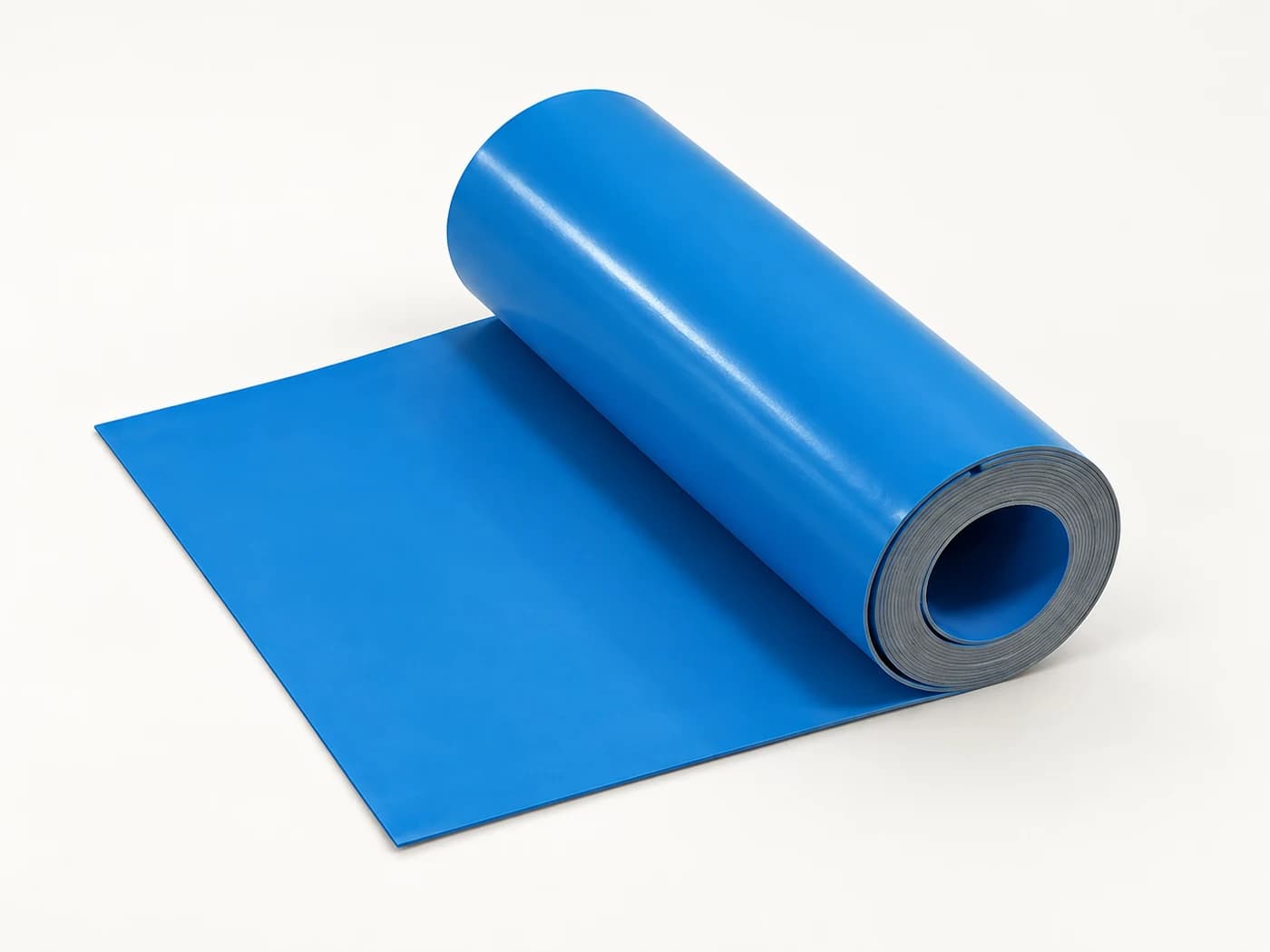
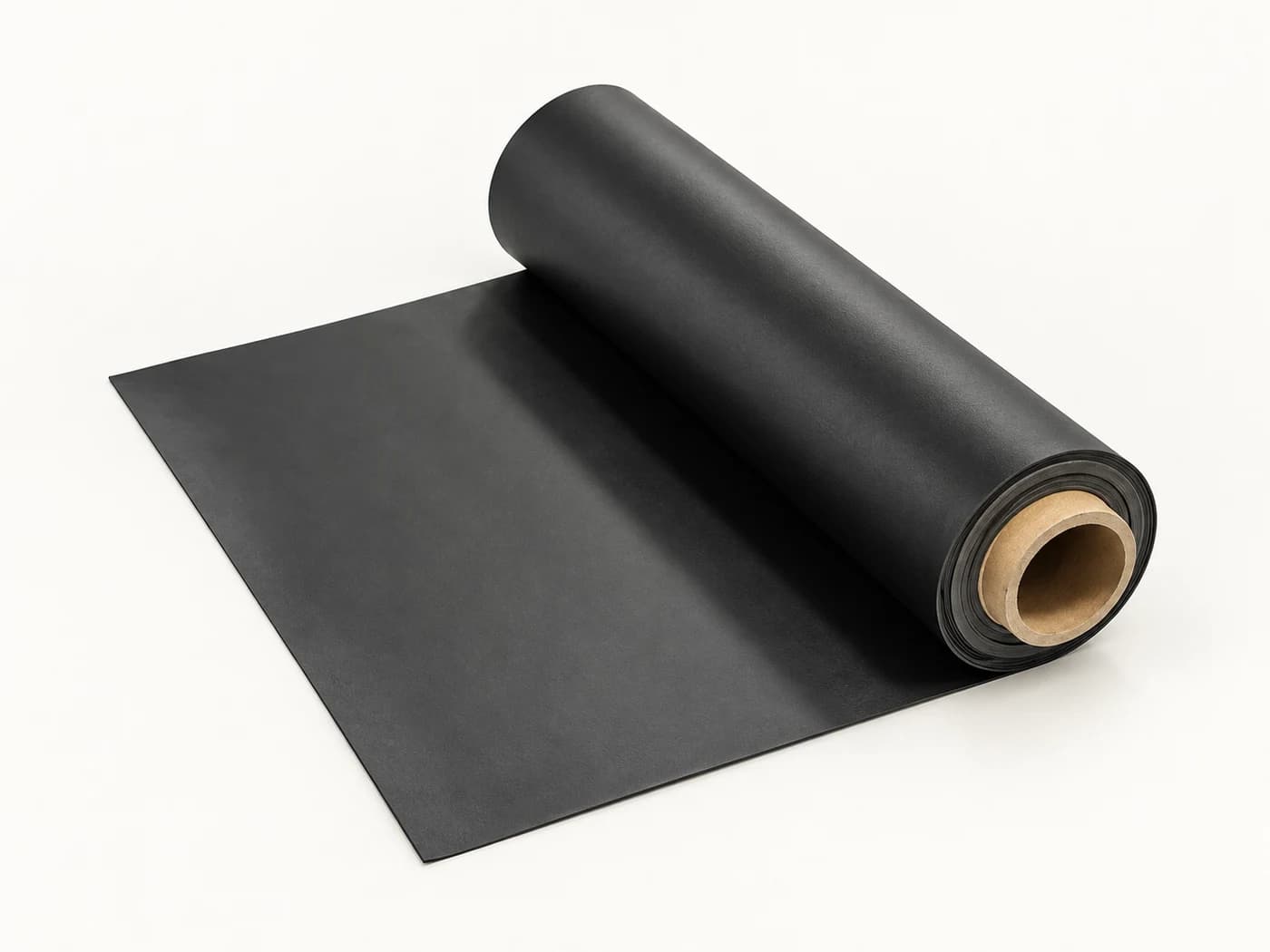
Questions worth asking.
How do I balance package passage and curtain shielding?
Evaluate package weight and stiffness, belt speed, strip dimensions, overlap and curtain return together. Validate complete-system shielding with representative products passing through.
What cleaning information should I provide?
Specify cleaner chemistry, concentration, temperature, contact time and oil exposure. Request documentation appropriate to the actual food-contact and cleaning conditions.
LET’S ENGINEER WHAT’S NEXT
Your application. Our next conversation.
Share your equipment, radiation conditions and design constraints. Start with a material decision grounded in evidence.