

RADBAR / APPLICATION ENGINEERING
Security screening
Engineer curtain assemblies for baggage and parcel flow, surface wear, return motion and maintainable coverage.
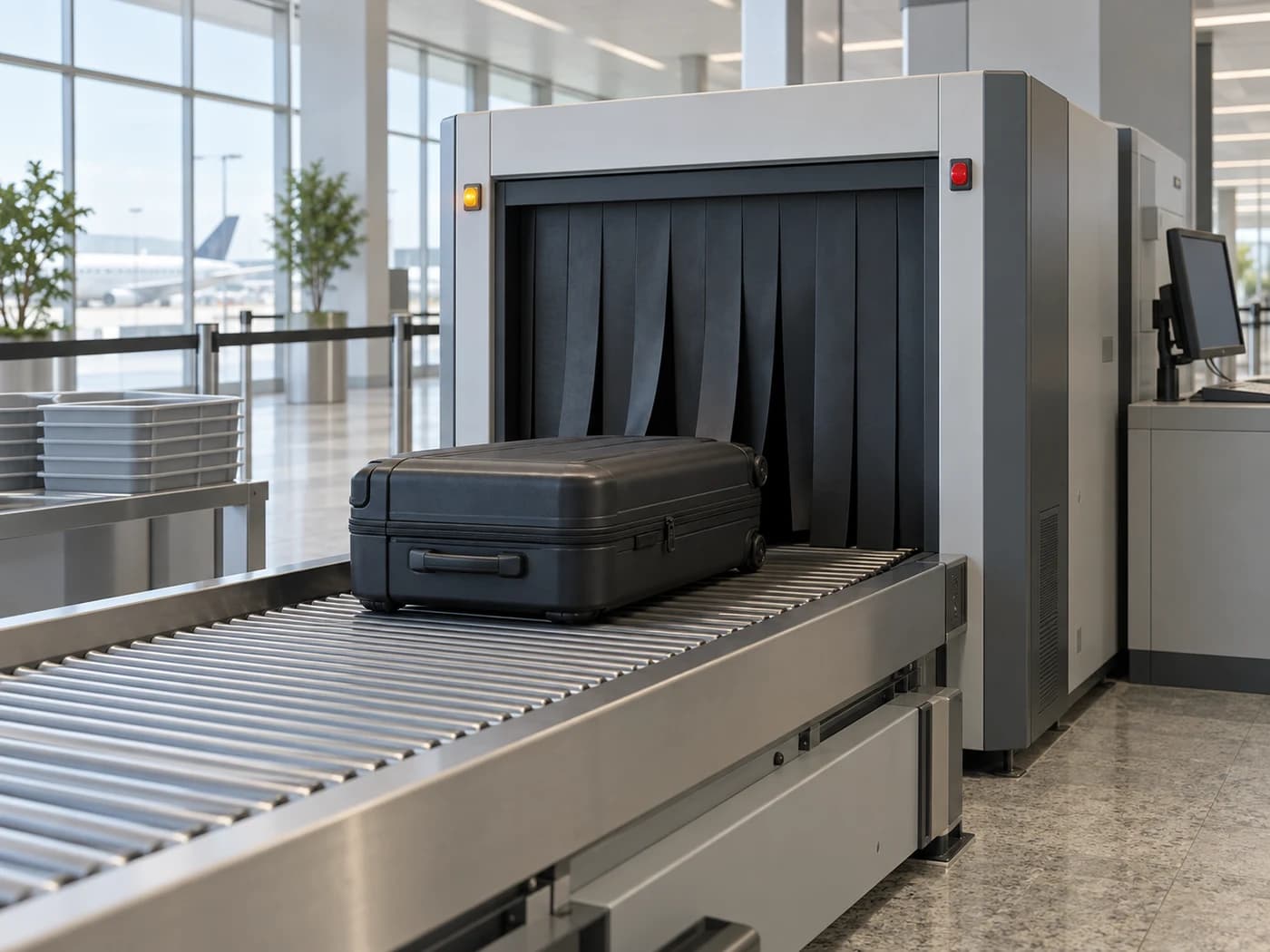 AI-generated application illustration
Built around continuous passage.
Engineer curtain assemblies for baggage and parcel flow, surface wear, return motion and maintainable coverage.
How do you choose a security X-ray scanner curtain?
Selecting a curtain for a baggage or parcel X-ray scanner means matching the series voltage range, lead equivalence, hanging weight, surface wear and strip geometry. The Radbar catalog lists three lead-free series: BaseShield (≤160 kV, cost-effective), ProShield (≤120 kV, general-purpose) and UltraShield (≤160 kV, lightweight), weighing 7–8, 6.3–6.6 and 4.3–4.5 kg/m² at 0.35 mmPb. Listed grades are 0.35 / 0.5 / 0.6 / 1.0 mmPb, with customization from 0.125 to 2.0 mmPb.
Reviewed 2026-09-24 · values from the model catalogs and editions cited
HOW IT FITS TOGETHER
See where the protection works.
Curtains in a baggage scanner tunnel
- X-ray source and tunnel; choose a series whose listed range (≤120 or ≤160 kV) covers the scanner.
- Entry and exit curtain sets, supplied as rolls, pre-cut sets or single strips.
- Overlap and strip width must match the original hanger and hole pattern.
- Bags push the strips aside; hanging weight affects passage and return.
- Flow direction; VBK film or FBK fabric surface is chosen by wear pattern.
FROM THE ORIGINAL PRODUCT LITERATURE
Catalog data, with its conditions.
| Series | Listed tube voltage | Weight at 0.35 mmPb (kg/m²) | Catalog positioning |
|---|---|---|---|
| BaseShield | ≤160 kV | 7–8 | Cost-effective |
| ProShield | ≤120 kV | 6.3–6.6 | General-purpose |
| UltraShield | ≤160 kV | 4.3–4.5 | Lightweight |
Voltage-to-series mapping follows the original table columns. Confirm the selected formulation and test conditions.
Source: Security curtains, p.2
| Catalog item | Food scanner curtains | Security X-ray curtains |
|---|---|---|
| Listed tube voltage | 90 / 120 kV | ≤120 kV (ProShield) / ≤160 kV (BaseShield, UltraShield) |
| Listed grades | 0.125 / 0.175 / 0.25 mmPb | 0.35 / 0.5 / 0.6 / 1.0 mmPb |
| Customization range | 0.125–0.5 mmPb | 0.125–2.0 mmPb |
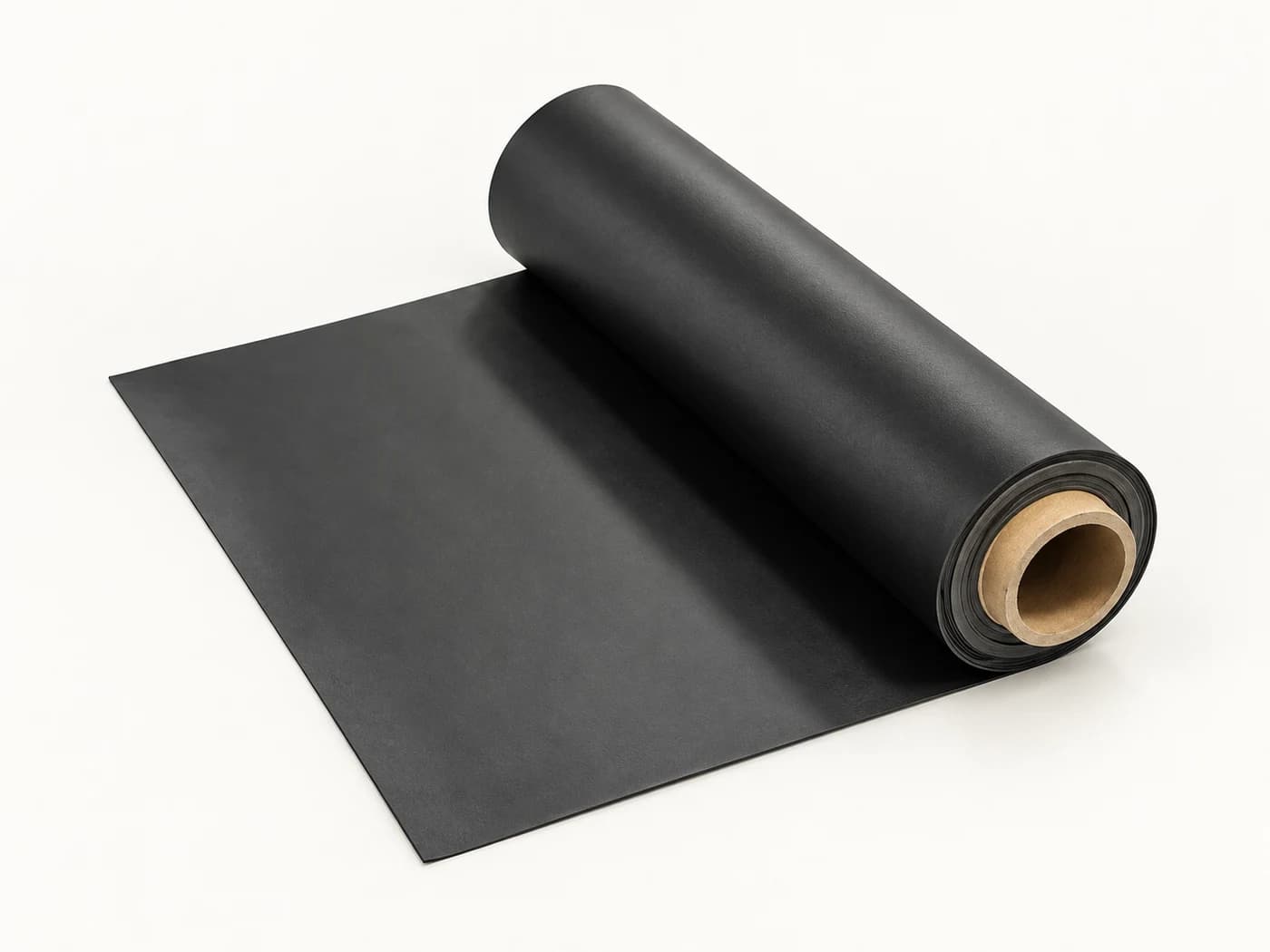
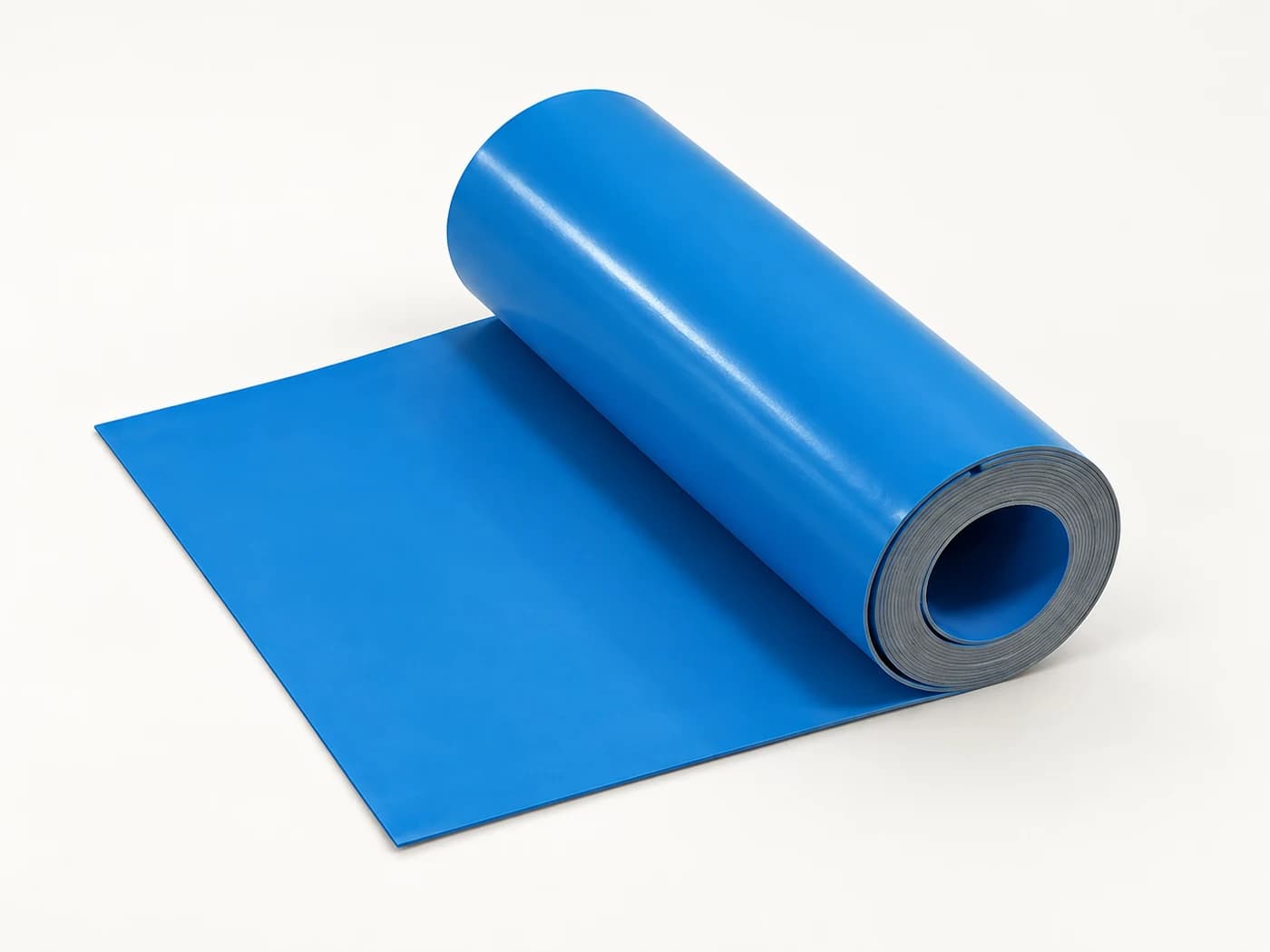
| Surface | Light-blue polyurethane, easy to clean | Black VBK film or FBK fabric coating |
| Temperature range | −40 to 70 °C | −40 to 70 °C |
| Supply | Roll, OEM set or single strip | Roll, pre-cut set or single strip |
Catalog values from two different datasheets. They describe listed ranges, not a ranking; validate the installed curtain on the actual scanner.
Source: Food scanner curtains p.2; Security curtains p.2
- Surface options: high-wear VBK film or FBK fabric coating.
- Maximum listed width 1200 mm; temperature range −40 to 70 °C.
- Supply as large roll, pre-cut set or single strip, with custom printing.
SELECTION STEPS
Make the decision in order.
- 01
Match the voltage range
Confirm the scanner operating voltage and choose a series whose listed range covers it.
- 02
Set lead equivalence and method
State the required grade together with its test conditions.
- 03
Balance weight and return
Lighter strips help passage, but return motion and overlap still need checking.
- 04
Choose the surface
VBK or FBK, based on wear pattern, contact conditions and maintenance.
- 05
Send the drawings
Opening size, hanger details, strip length, overlap and replacement-part drawings; choose roll, set or strip supply.
COMMON MISTAKES
Where specifications usually go wrong.
- Defaulting to the lightest series. The lightest option is not automatically right for every machine.
- Treating “over 5 million baggage passes” as a service-life guarantee without checking load and criteria.
- Replacing strips without matching the original overlap and hole pattern.
Related products & materials
Questions worth asking.
What determines the correct scanner curtain?
Match the series voltage range, lead equivalence, hanging weight, tunnel opening, surface and strip geometry. The lightest option is not automatically appropriate for every machine.
Can replacement strips be made to an OEM drawing?
The catalog lists pre-cut sets and individual strips. Provide mounting holes, strip length and width, overlap, surface requirements and the scanner operating range for confirmation.
LET’S ENGINEER WHAT’S NEXT
Your application. Our next conversation.
Share your equipment, radiation conditions and design constraints. Start with a material decision grounded in evidence.