

Flexible stock for garment construction
Sheet and roll formats support cutting and integration into protective garments. Confirm layer direction, lamination, seam coverage and handling requirements with the production team.
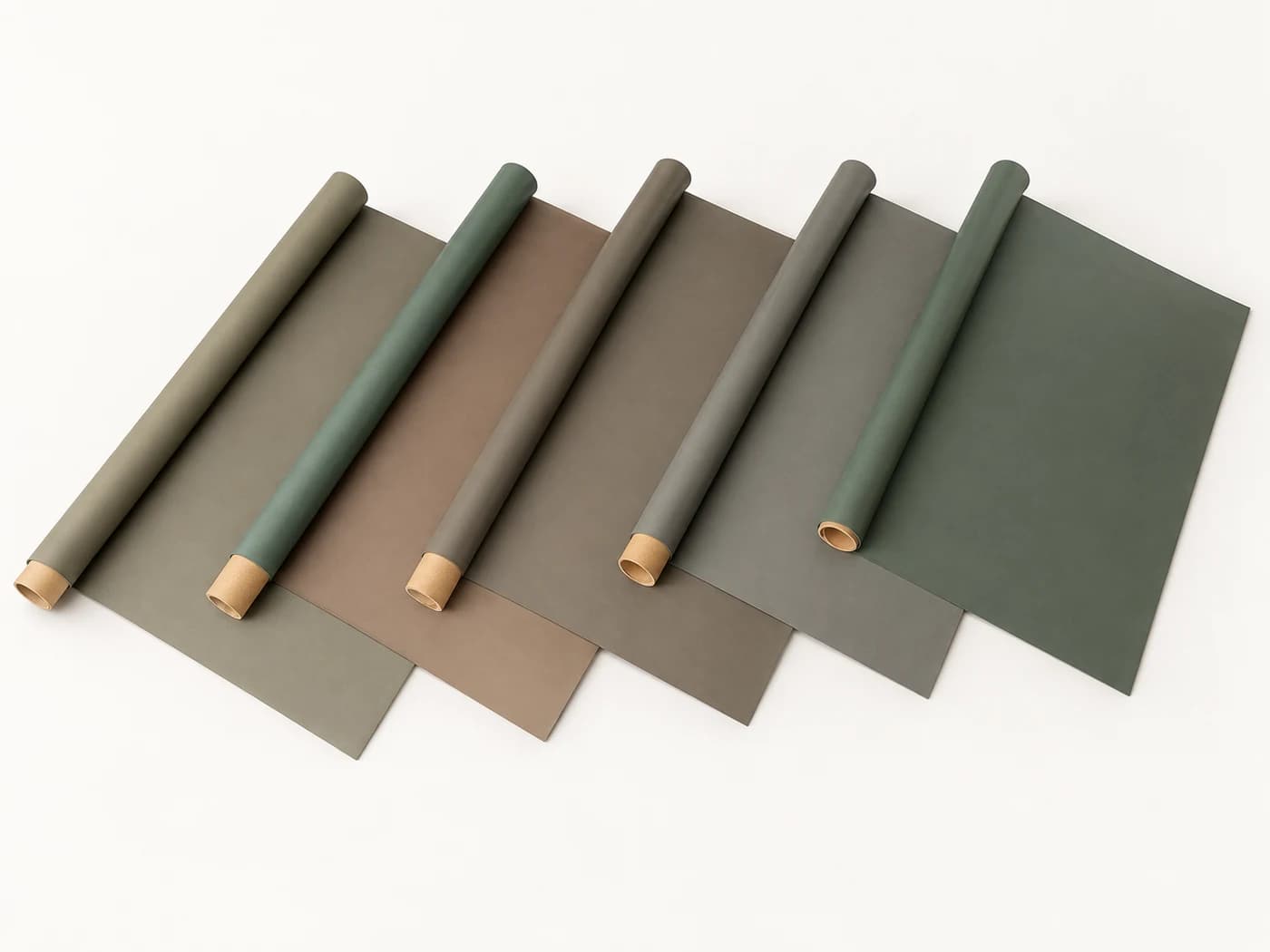 Rendering based on product reference
RADBAR / MATERIALS
Lead-free flexible sheet stock for protective garment manufacturers. Compare SUM, UM, NPL, IEC NPL, MS-A and ML against your specified test geometry, tube voltage and weight requirements.
Lead-free materialOEM materialsSix seriesSource: manufacturer product literature linked above. Confirm current model, test conditions and supply specification for your order.
SERIES COMPARISON
| Series | Tube voltage | Geometry | Areal weight kg/m² | Thickness mm |
|---|---|---|---|---|
| SUM | 80–100 kV | Narrow / 窄束 | 1.3 / 1.95 / 2.6 | 0.33 / 0.51 / 0.66 |
| UM | 70–110 kV | Narrow / 窄束 | 1.40 / 2.10 / 2.80 | 0.36 / 0.54 / 0.72 |
| NPL | 60–110 kV | Broad / 宽束 | 1.45 / 2.12 / 2.83 | 0.36 / 0.51 / 0.71 |
| IEC NPL | 60–150 kV | Broad / 宽束 | 1.5 / 2.10 / 3.0 | 0.36 / 0.54 / 0.74 |
| MS-A | 90–110 kV | Narrow / 窄束 | 1.5 / 2.25 / 3.0 | 0.39 / 0.58 / 0.78 |
| ML | 90–110 kV | Narrow / 窄束 | 1.8 / 2.7 / 3.6 | 0.48 / 0.72 / 0.94 |
Each set of three values corresponds to 0.125 / 0.175 / 0.25 mmPb. Source: Medical X-Ray Shielding Core Material, page 2, version 2509. Different beam conditions are not directly rankable; confirm test standards and order requirements.
Six flexible, lead-free material series give protective garment manufacturers a choice of beam range, construction and areal weight. The catalog also describes the core as latex-free. Select a series against the finished garment’s intended test conditions, rather than comparing lead-equivalence labels alone.
Sheet and roll formats support cutting and integration into protective garments. Confirm layer direction, lamination, seam coverage and handling requirements with the production team.
NPL and IEC NPL are described as bilayer lead-free materials. SUM and UM share the catalog’s lightweight lead-free category; MS-A and ML provide further formulation choices.
Listed hardness is Shore A 70 ± 2. Width options are 1200, 1220 and 1380 mm, with 15 or 20 m roll lengths. Confirm the available combination for the selected series.
Transcribed from manufacturer literature, with source references and conditions kept alongside each table.
| Series | Catalog color | Referenced method |
|---|---|---|
| SUM | Brown | ASTM F2547-18 |
| UM | Brown | ASTM F2547-18 |
| NPL | Brown + grey-green | IEC EN 61331-1:2014 |
| IEC NPL | Brown + grey-green | IEC EN 61331-1:2014 |
| MS-A | Grey-green | ASTM F2547-18 |
| ML | Brown | GBZ/T 147-2020 |
Method names are reproduced from the 2509 specification table. Request the relevant report and sample identification; a referenced method is not proof of certification for every finished garment.
Source: Medical X-Ray Shielding — Core Material, page 2 · 2509No. SUM, UM, NPL, IEC NPL, MS-A and ML are listed under different beam ranges and geometries. Compare weight only after matching radiation quality, lead equivalence and measurement method.
The page-2 image illustrates five nominal 0.25 mmPb samples. It does not supply a complete comparative test protocol; use model-specific reports for engineering acceptance.
Manufacturer literature · referenced pages 1–2 · edition 2509
Selection notes explain the literature and do not replace model-specific instructions, test reports or project design.
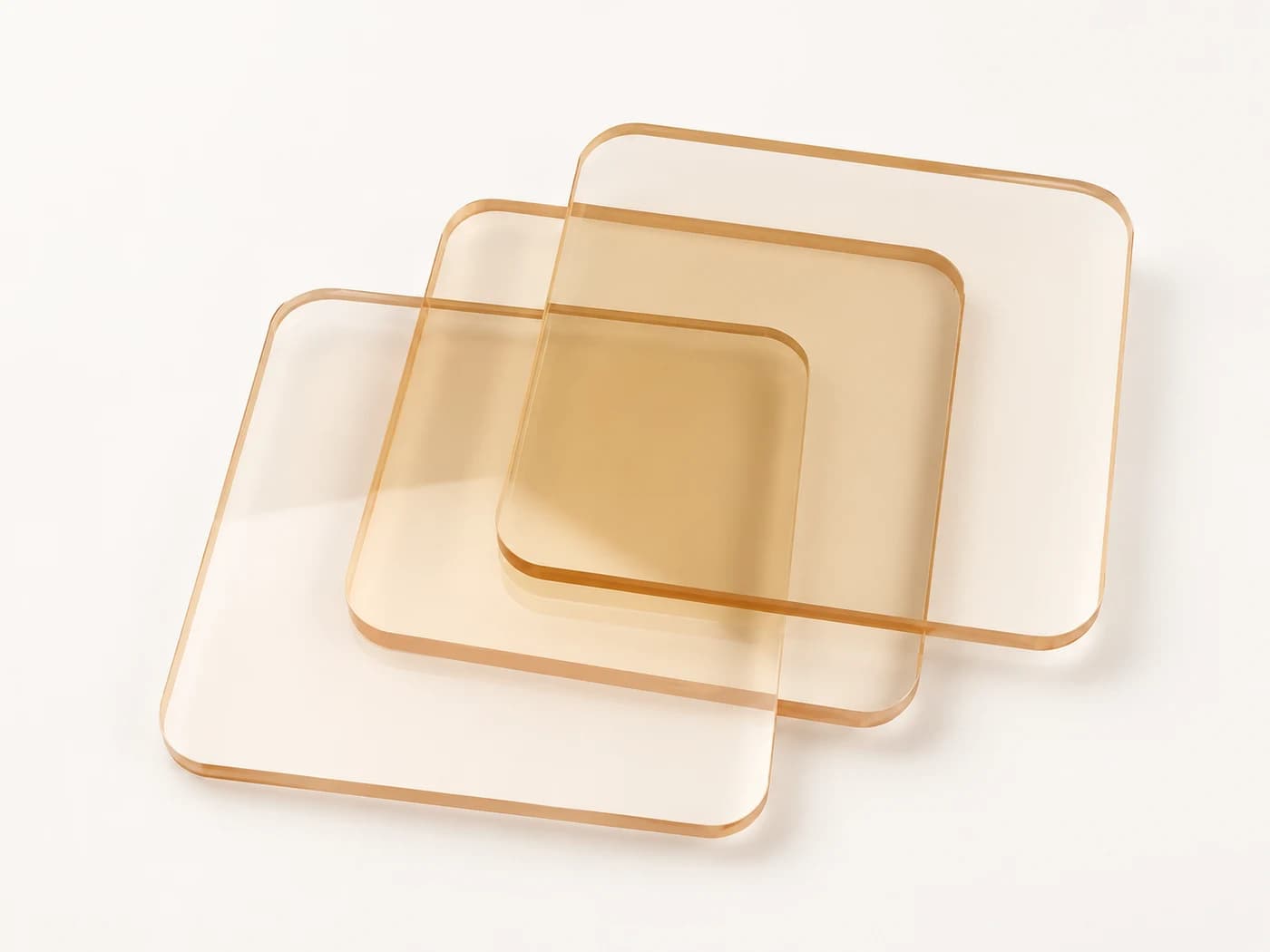 Material illustration
Optically transparent / Machinable
A clearer view of protection.
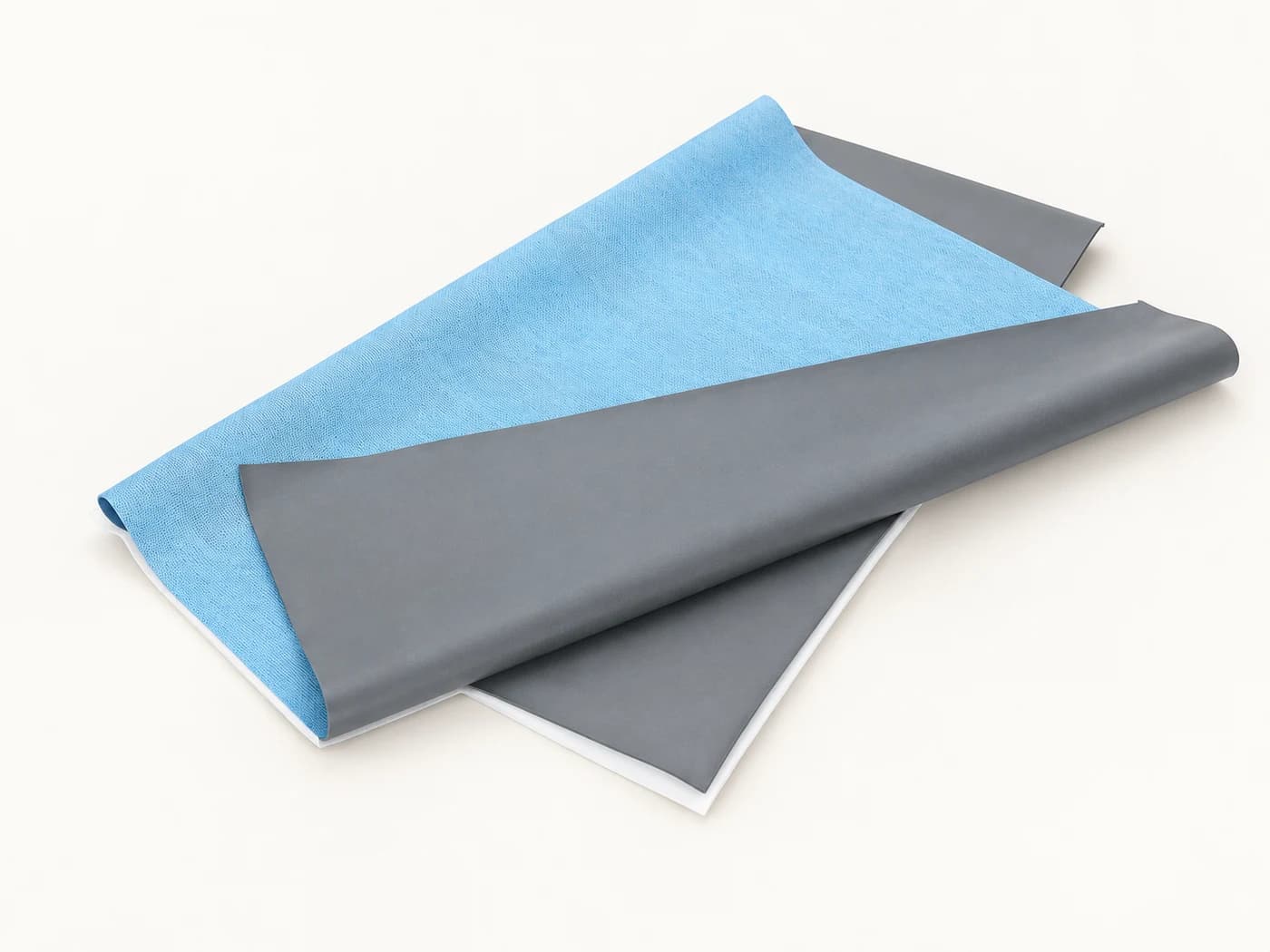 Material illustration
Single use / Custom sizes
Protection around the procedure.
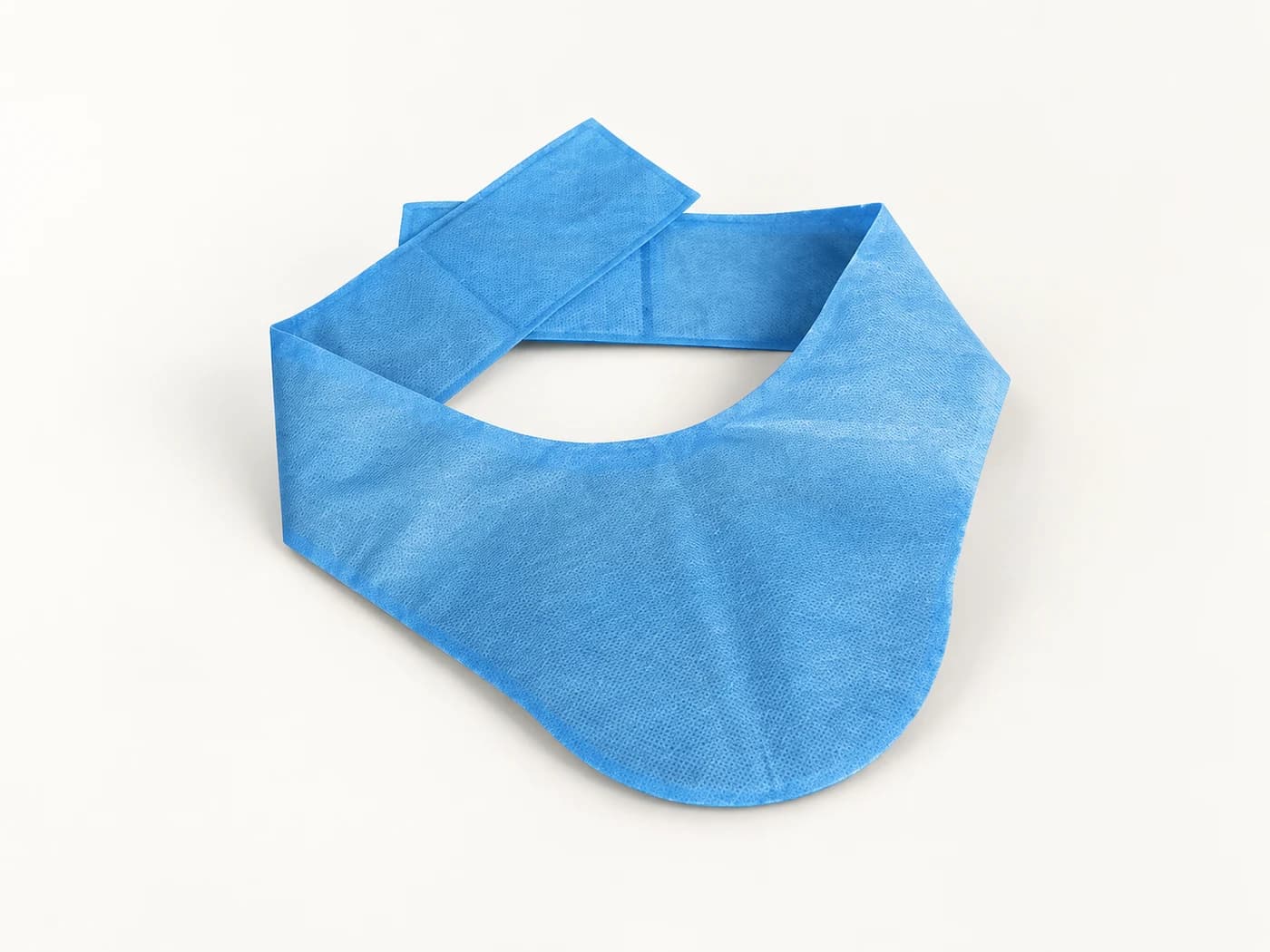 Material illustration
Lead-free / Soft construction
A considered fit for single-use workflows.
LET’S ENGINEER WHAT’S NEXT
Share your equipment, radiation conditions and design constraints. Start with a material decision grounded in evidence.