

RADBAR / APPLICATION ENGINEERING
Medical & interventional
From flexible garment cores to scatter drapes and transparent barriers, match each solution to the procedure, equipment and exposure geometry.
 AI-generated application illustration
Protection designed around people.
From flexible garment cores to scatter drapes and transparent barriers, match each solution to the procedure, equipment and exposure geometry.
How do you choose medical X-ray protection products?
Medical X-ray protection is usually built from several product types: flexible lead-free core sheets for garment manufacturers, single-use drapes, collars and caps for procedure workflows, and lead-containing clear acrylic, eyewear and face shields for viewing and eye/face protection. Every catalog lead-equivalence value belongs to a stated test condition, so selection should follow the procedure, the beam direction and finished-product validation rather than the mmPb label alone.
Reviewed 2026-09-24 · values from the model catalogs and editions cited
HOW IT FITS TOGETHER
See where the protection works.
Protection around an interventional C-arm
- X-ray tube below the table; the beam passes the patient to the detector.
- The patient is the main source of scatter reaching staff.
- Operator: garment with shielding core, collar or cap, and eyewear or face shield.
- Single-use scatter drape placed within the procedure field.
- C-arm accessory fitted to the imaging components; confirm the interface by equipment model.
- Transparent barrier in clear lead acrylic for viewing.
FROM THE ORIGINAL PRODUCT LITERATURE
Catalog data, with its conditions.
| Product | Protection format | Key catalog data | Material |
|---|---|---|---|
| Medical shielding core | Garment core, sheet or roll | Six series; 0.125 / 0.175 / 0.25 mmPb; 60–150 kV depending on series; 1.3–3.6 kg/m² | Lead-free |
| Scatter protection drapes | Single-use drape | Aluminium / bismuth; 300 × 300 to 600 × 800 mm; >60% attenuation at 80 kVp (manufacturer value) | Lead-free |
| Disposable collars & caps | Single-use head and neck | Five grades 0.125–0.50 mmLE; boxes of 10 / 20 / 50 | Lead-free |
| C-arm radiation shield | Equipment accessory | Shielding layer, plastic cover, nonwoven strap; request dimensions and lead equivalence | Lead-free shielding layer |
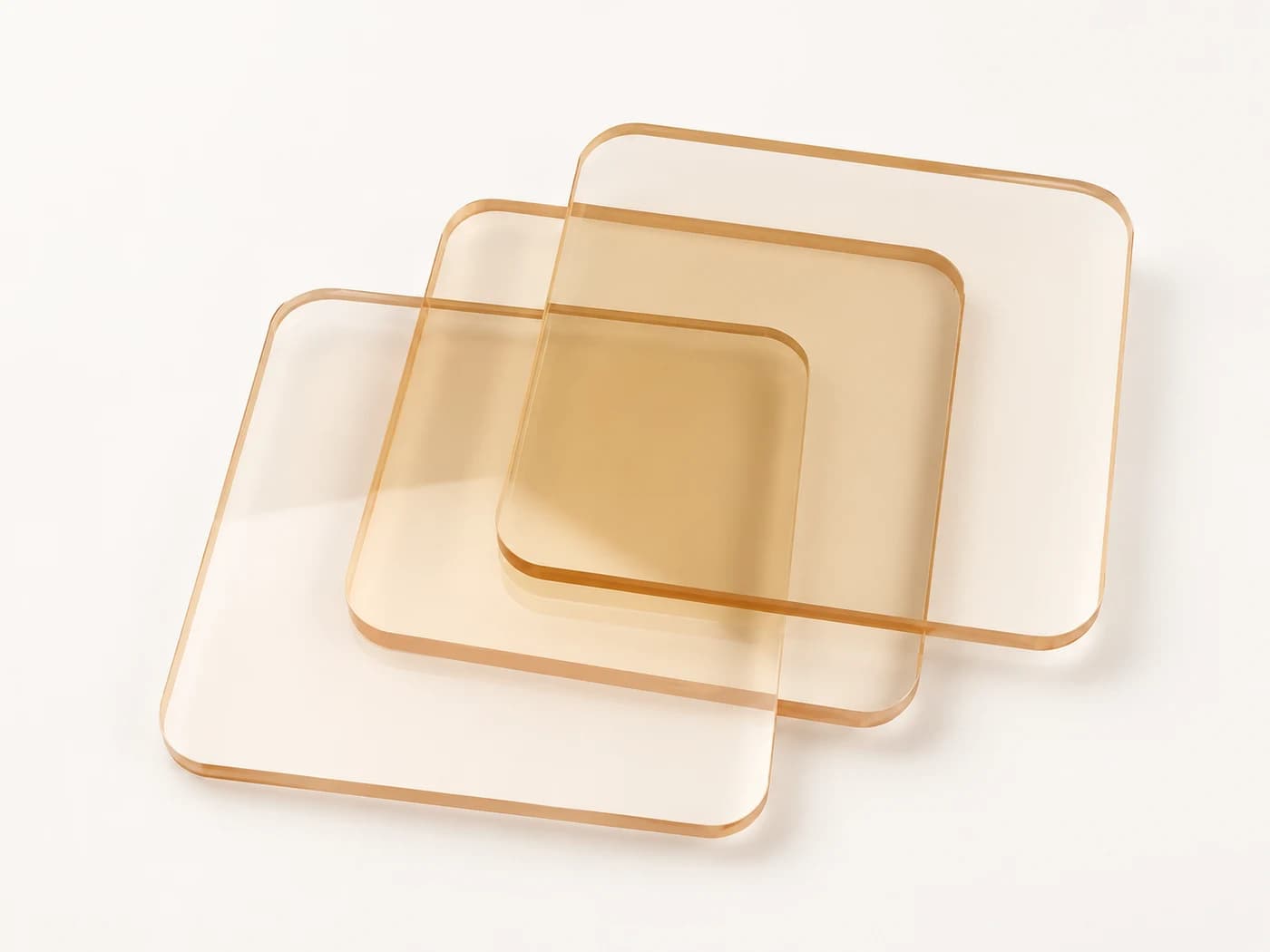
| Clear lead acrylic | Viewing window, barrier | C-2 to C-12; 0.07–0.5 mmPb; 87–93% light transmission | Lead-containing |
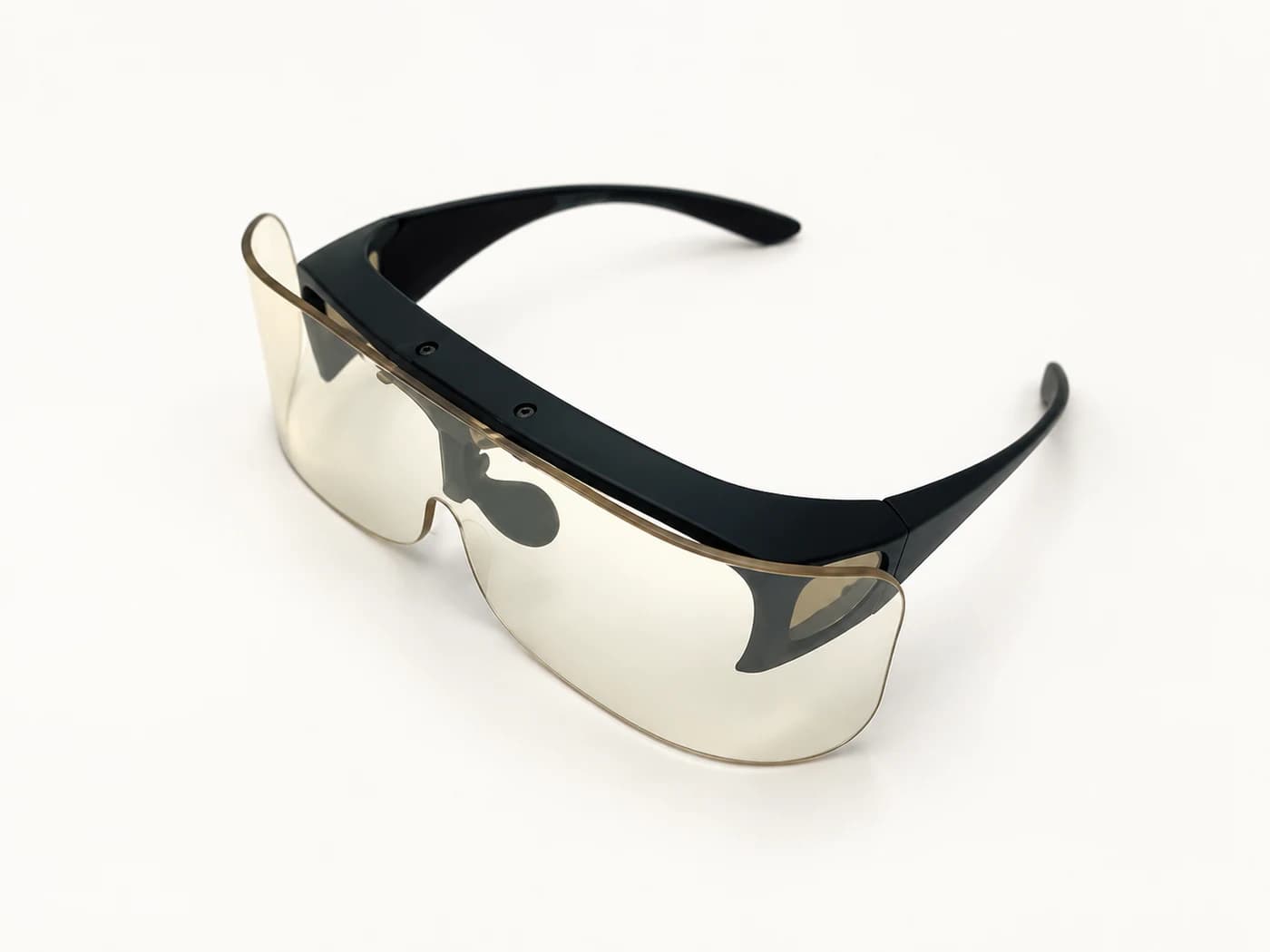
| X-ray protective eyewear | Eye protection | Four variants; 55 g; 0.07 mmPb | Lead-containing |
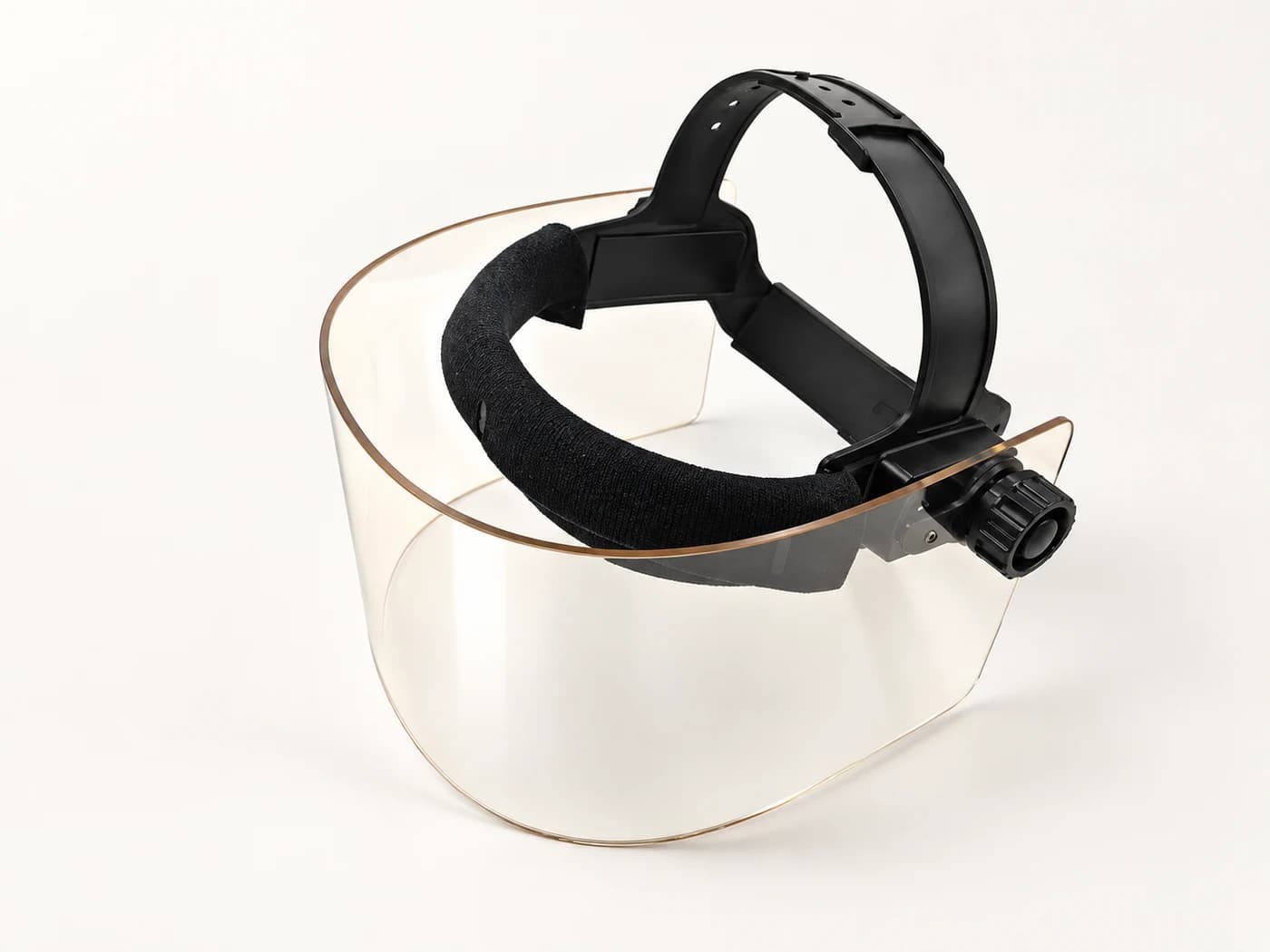
| Radiation face shields | Eye and face protection | Lead acrylic; 0.125 mmPb; full face 360 g / half face 300 g | Lead-containing |
Values are catalog entries with different test conditions and formats. They are not directly comparable across rows.
Source: Core 2509 p.2; Disposable 2509 pp.1–2; C-arm p.1; Acrylic 2509 p.2; Goggles / face shields 2509 pp.1–2
SELECTION STEPS
Make the decision in order.
- 01
Define the procedure and beam direction
Record equipment type, tube-voltage range, operator and patient positions and where scatter originates.
- 02
Choose the format by body region
Torso: garment core. Head and neck: collars and caps. Eyes and face: eyewear or face shields. Procedure field: scatter drapes and C-arm accessories. Viewing: clear lead acrylic.
- 03
Compare under identical conditions
The same mmPb label must share radiation quality, narrow- or broad-beam geometry and test method before values can be compared.
- 04
Confirm the use workflow
Reusable items need cleaning and inspection rules; single-use items need sterile-packaging status, shelf life and instructions.
- 05
Validate the finished product
Check seams, overlap, fit, mobility and coverage in the real working posture.
COMMON MISTAKES
Where specifications usually go wrong.
- Ranking by mmPb alone. SUM is listed for narrow-beam 80–100 kV and NPL for broad-beam 60–110 kV; their values are not the same test.
- Treating the drape’s “>60% at 80 kVp” as a clinical dose reduction for operators or patients.
- Assuming the whole catalog is lead-free. Clear acrylic, eyewear and face shields contain lead.
- Transferring the core’s rare-earth/bismuth construction to other lines. The disposable drape literature describes aluminium and bismuth.
Related products & materials
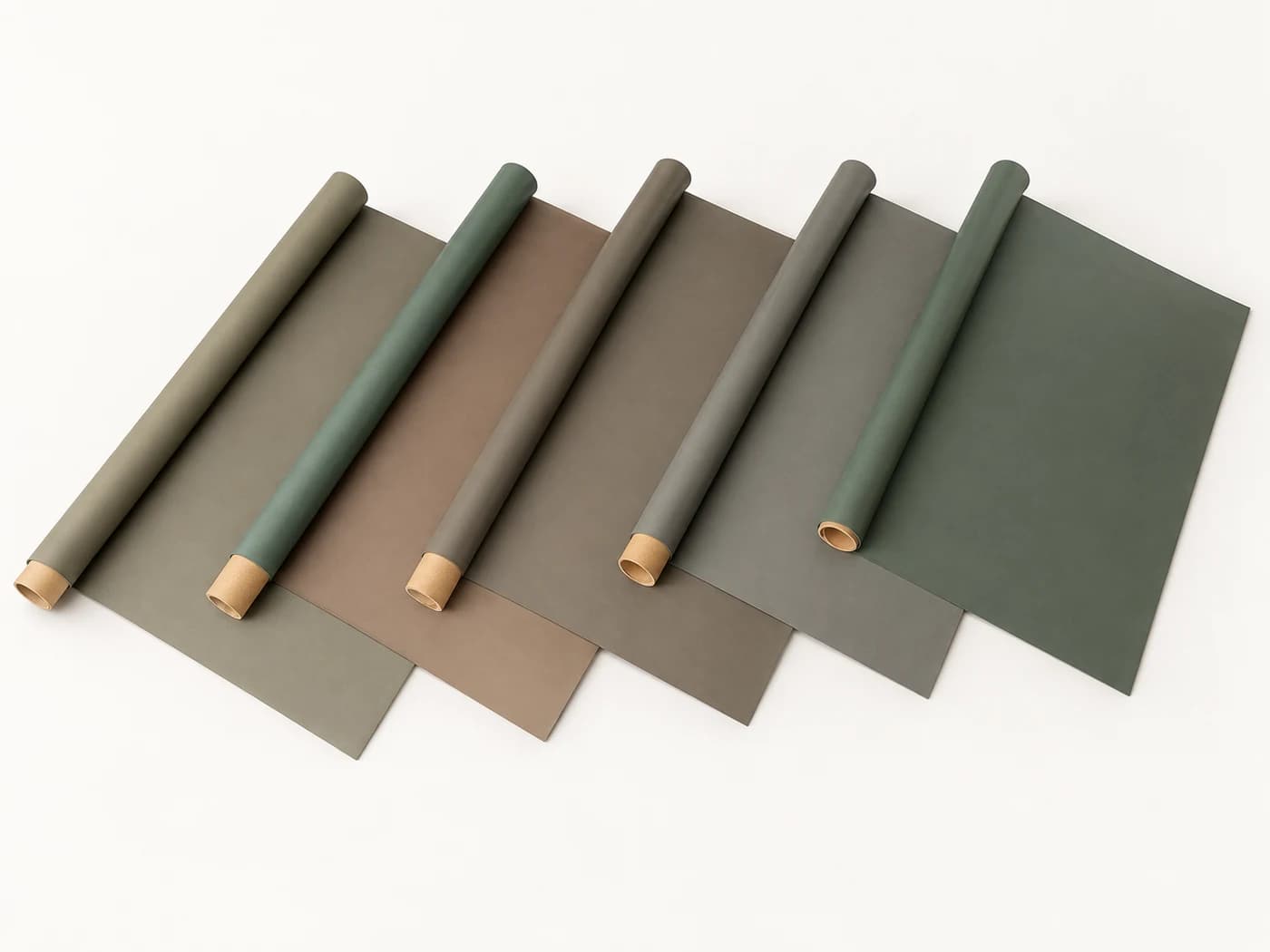 Material illustration
OEM materials / Six series
Medical shielding core
Flexible. Formable. Purpose-engineered.
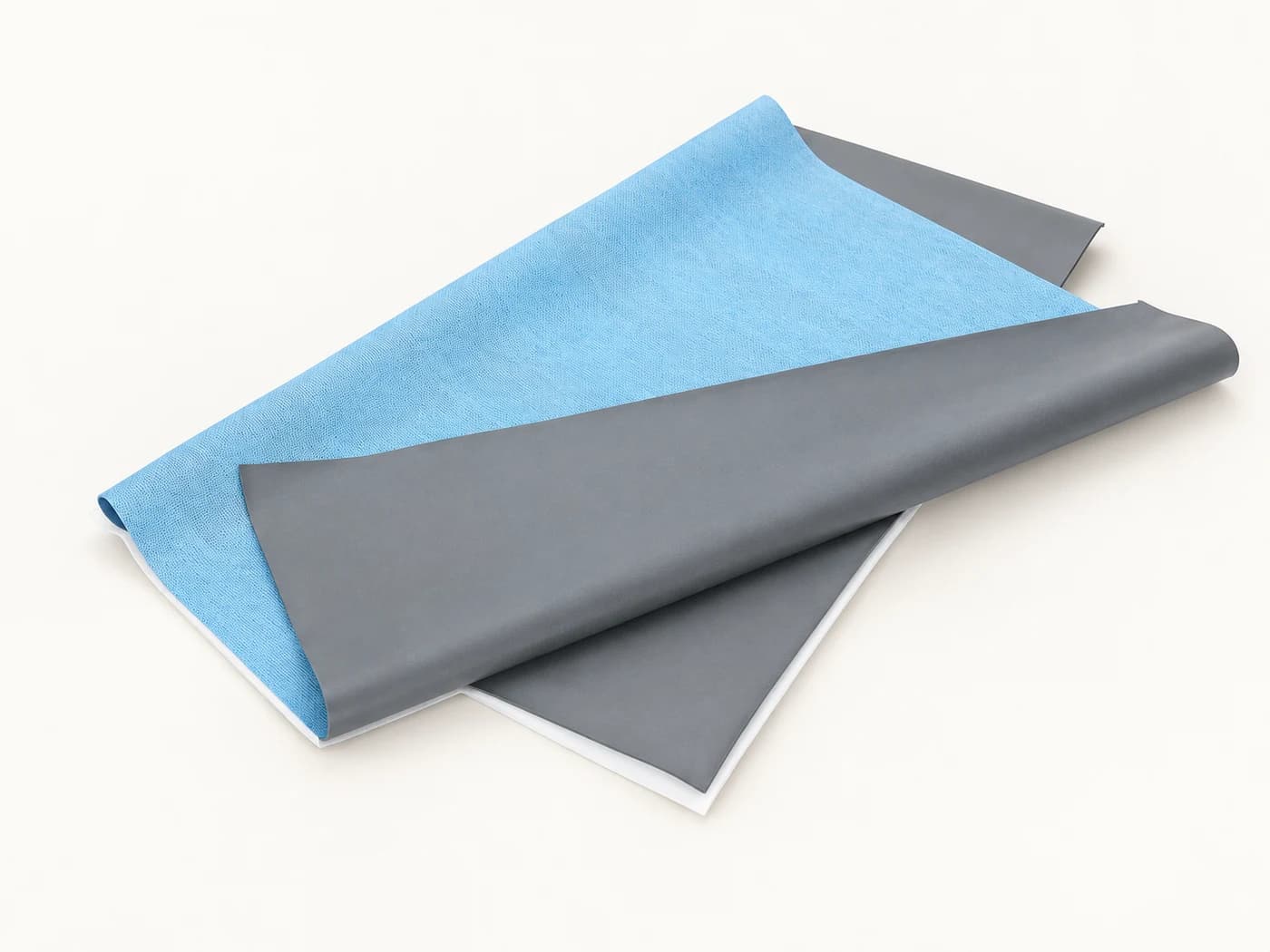 Material illustration
Single use / Custom sizes
Scatter protection drapes
Protection around the procedure.
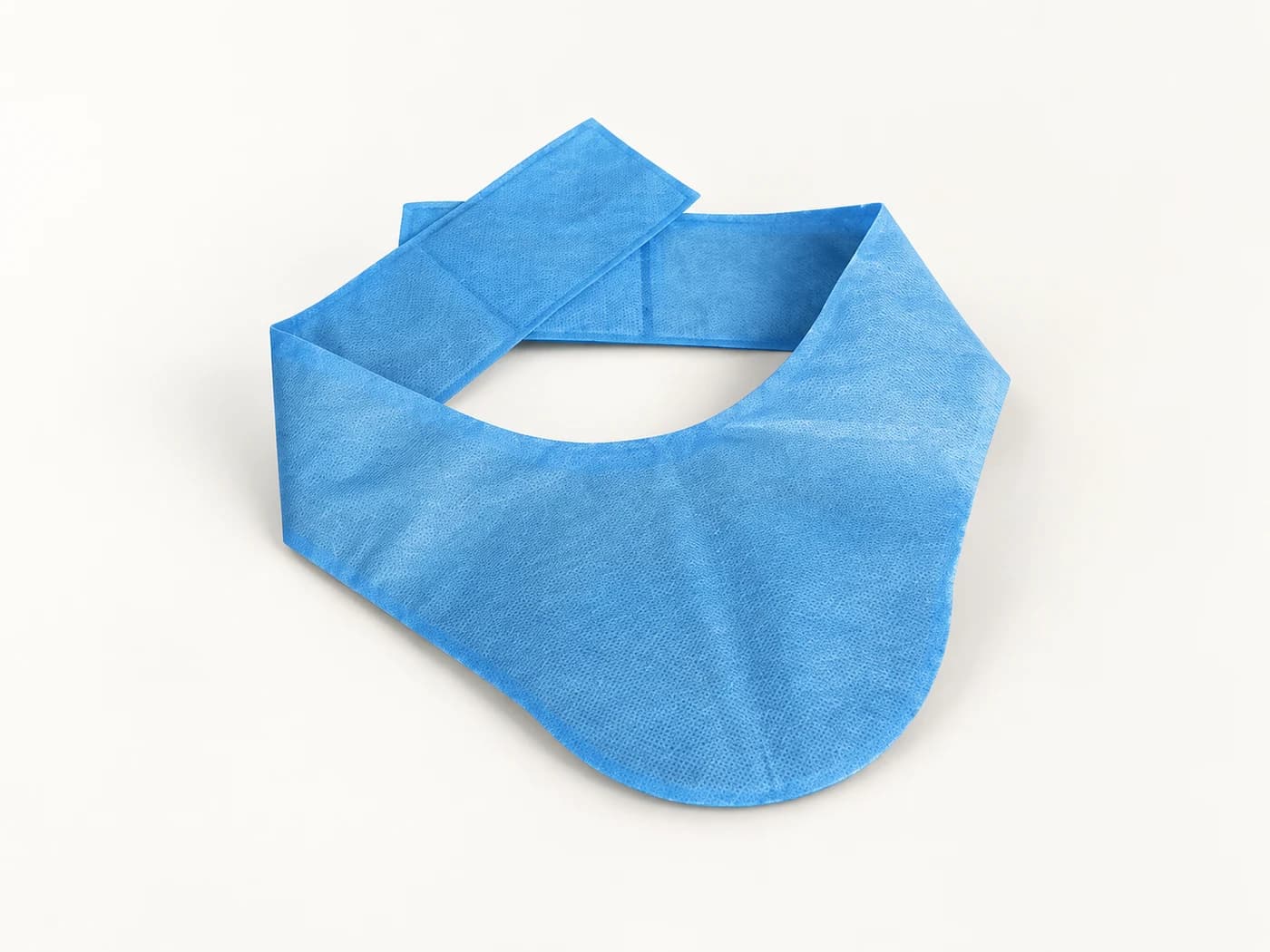 Material illustration
Lead-free / Soft construction
Disposable collars & caps
A considered fit for single-use workflows.
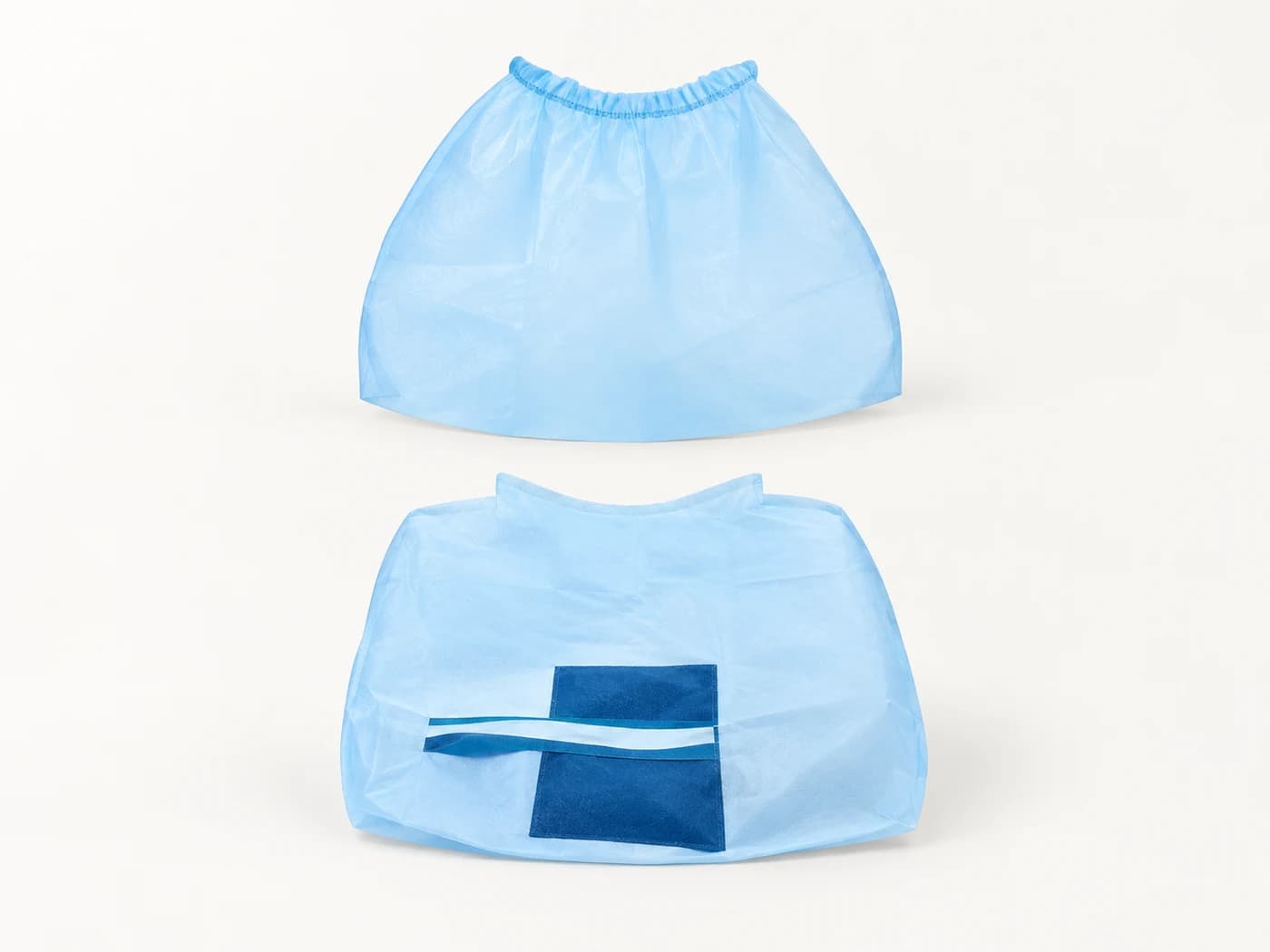 Material illustration
Equipment integration / Single use
C-arm radiation shield
Designed to work with your equipment.
 Material illustration
Optically transparent / Machinable
Clear lead acrylic
A clearer view of protection.
 Material illustration
Front & side coverage / Flip-up option
X-ray protective eyewear
Visibility meets considered coverage.
 Material illustration
Adjustable / Lead acrylic
Radiation face shields
An adjustable approach to face protection.
Questions worth asking.
How do core materials, drapes and transparent barriers differ?
Core sheets are integrated into protective garments; disposable drapes address procedure-specific scatter; transparent shielding supports viewing. Each has a different geometry and use boundary.
Can a catalog attenuation percentage predict clinical dose reduction?
Not by itself. Positioning, source direction, equipment settings and the complete protection arrangement affect exposure. Use validated conditions for the intended procedure.
LET’S ENGINEER WHAT’S NEXT
Your application. Our next conversation.
Share your equipment, radiation conditions and design constraints. Start with a material decision grounded in evidence.